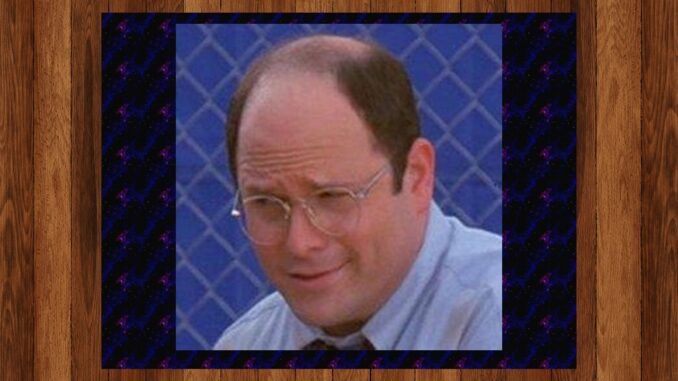
The actor Jason Alexander famously confronted the Seinfeld writer and co-creator Larry David on multiple occasions, taking issue with the bizarre and socially self-destructive behavior of the character he played, George Costanza.
Alexander protested that George got into situations no human being would, reacting in ways that struck him as “for writing purposes only.” To which David would invariably reply that those very situations had happened to him, and that he had reacted in exactly the same way.
This is the kind of uncanny valley I’ve noticed a lot of writers fall into.
A scene, a character’s action, or a line of dialogue pulled directly from a real-life experience is more likely to get shot down with critiques like, “No one would do that,” or “No one would say that,” or simply “That’s unrealistic!”
To which the writer replies with righteous indignation: “But that actually happened to me!” or “But that’s based on someone I know!”
This happens so frequently that I’ve had to ban such critiques at my writer’s group.
This is the George Costanza effect in action: the more true something is, the more fake it reads.
It puts me in mind of the cartoonist Scott Adams, who argued in Loserthink that if you have trouble imagining that something could be true, you might have an imagination problem.
Meanwhile, characters and situations invented from whole cloth pass muster more easily in the “realism” department.
It really is true, as they say, that truth is stranger than fiction.
And there is a reason for it that isn’t obvious.
When you’re inventing a fictional world, it’s easy to get overly critical, asking yourself, “Is this believable? Is this realistic? Is that going too far? Will this land?”
Under that barrage of self-editing, you’ll naturally veer toward engineering characters and situations that feel more realistic, even if the results are less interesting on the page.
It’s far better for writers to ignore criticism from the realism department altogether, for the simple reason that realism itself is unrealistic.
The antidote to the George Costanza effect is the basket case theory (again from Scott Adams): scratch far enough beneath the surface and everyone proves to be a basket case with different kinds of baskets, and the reality behind the facade is far stranger than you thought.
To which you are sure to notice: “You can’t make this shit up.”
Lean into the unreality of reality.
Source: Jason Alexander, interview with the Television Academy Foundation, 2013. The Interviews: An Oral History of Television.
Leave a Reply